
So you’ve got a group together to start a 13th Age campaign. Congratulations! Now you’ve got to figure out what kind of character you want to play – and how your party members fit together.
To help introduce you to different character builds and flexibility 13th Age offers, I’ve written an example party with some non-traditional combinations of class and kin: Irontooth, the high elf fighter; Habersdasher, the gnome cleric; Johnny Cloaks, the half-orc rogue, and the dwarf wizard Marlo the Magnificent.
Let’s meet them!
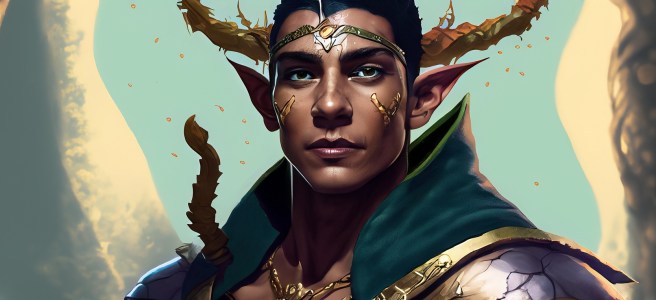
Irontooth
What a tank. Weighing in at 33 hit points and 18 AC, Irontooth is a fighter destined to take on the most dangerous foes and stay on his feet. The Extra Tough class feature grants an extra recovery. The Tough as Iron talent gives him an efficient self-heal, while Skilled Intercept gives him a chance to dash in front of enemies moving to attack his more frail allies. Once he engages an enemy, his shield increases the odds of triggering the Defensive Fighting attack, which gives him even higher armor, while Threatening helps keep enemies from escaping. But he’s not purely defensive – his Comeback Strike lets him dish out an extra attack once per battle. And his elven teleport ability is a great way to move around the battlefield and take the fight to enemy spellcasters and archers.
Haberdasher
Ah, Haberdasher. What a trickster. She’s the other frontliner of the group – as a cleric she doesn’t have as many hit points as Irontooth, but does have just as high AC. Haberdasher brings some innate gnomish magic that can daze foes, while the Trickery domain lets her manipulate the attack rolls of both friends and enemies. Her Knowledge domain will help with lore-based skill checks out of combat, and grant an attack reroll in combat.
But that’s all just icing on the cake – the cake made of spells. Heal and Cure Wounds will help the other party members keep standing, while Spirits of the Righteous deals a blistering amount of holy damage. And when the chips are down, Haberdasher can bless weapon, increasing her modest d6 mace to a righteous d12 sledgehammer.
Johnny Cloaks
Johnny Cloaks has one job: deal as much damage as possible … and don’t get caught. As a half-orc, he can re-roll a missed attack once per battle. As a rogue, his Improved Sneak Attack and Murderous talents increase his sneak attack damage and give him better odds to land critical hits against staggered targets. On the other hand, he has middling AC and far fewer hit points than Haberdasher and Irontooth, so he needs tools to help him escape danger. Tumble gives a +5 boost to disengage checks, while Tumbling Strike gives another +5 and lets him disengage as a quick action. And if he does get hit, he can use Roll With It to reduce that damage.
Marlo the Magnificent
As a wizard, Marlo can’t do the same consistent damage as Johnny Cloaks. But by taking the High Arcana talent, he can replace one of his spells with an extra casting of the daily Acid Arrow spell … which he can boost with Evocation to automatically roll maximum damage on a hit (or on a miss with other spells for which you also roll miss damage.) If an enemy gets in his face, he can use Shocking Grasp to pop free. And out of combat he can join in Haberdasher’s shenanigans with Disguise Self. A useful guy to have around, then … and one who, due to his lack of defensive spells, will appreciate Irontooth running interference for him.
So that’s the party – defender, support, striker, and a wizard with a concerning disregard for self-preservation. Classic. Assuming the dice roll ever in their favour (ha!) they should have a long, successful career. But this wasn’t the only way to build them; Irontooth could have grabbed a greatsword and more offensive talents and maneuvers; Johnny Cloaks could have leaned more into stealth than assault; Haberdasher could have specialized in obliterating the undead; Marlo could have taken the defensive Blur or Shield spells, or the Abjuration talent to give a +4 AC bonus when he casts a daily spell.
Hopefully this has opened your eyes to the many ways you can build fun characters in 13th Age. Next time, we’ll look at at some other classes, and the different ways they can also contribute to a party.
 Into the Fray